Fungicides work best when the product, the timing, and the field situation are aligned. In practice, better fungicide performance usually comes from earlier intervention, correct disease identification, stronger spray coverage, close attention to weather, and disciplined label-based use. If any one of these factors is weak, field results often become inconsistent.
That is why two growers can use similar fungicide programs and still see very different outcomes. The chemistry matters, but performance is also shaped by disease pressure, crop stage, canopy structure, and how well the spray reaches the infection site.
Main factors that affect fungicide effectiveness
| Factor | Why It Matters | What Often Goes Wrong | Practical Focus |
|---|---|---|---|
| Disease identification | Different diseases respond differently to different active ingredients | The problem is misread, so the product choice is off target | Confirm the disease before judging product performance |
| Application timing | Fungicides usually perform better before disease becomes established | Spraying starts too late, after infection is already advanced | Act early and align timing with disease risk |
| Spray coverage | Fungicides must reach the target surface or infection zone | Poor deposition leaves untreated areas inside the canopy | Improve uniform coverage and penetration |
| Crop stage | Protection needs change as the crop develops | Timing is based on schedule alone, not crop condition | Match the program to crop growth stage |
| Weather conditions | Rain, humidity, and temperature affect disease pressure and deposit persistence | High pressure periods are underestimated or wash-off risk is ignored | Watch disease-favorable weather closely |
| Residual activity | Protection does not last forever, especially under pressure | One spray is expected to solve a season-long problem | Treat fungicides as part of a program, not a one-time fix |
| Crop safety | Stronger is not always better | Overuse, poor timing, or stressed crops increase injury risk | Follow the label and local regulations |
| Resistance management | Repeated reliance on the same mode of action can reduce performance over time | Performance decline is blamed on application alone | Rotate responsibly and build a more durable program |
What makes fungicides work better in the field?
A fungicide program becomes stronger when you improve the full decision chain, not just the product choice. The strongest programs usually combine five habits: identify the disease correctly, spray before disease pressure gets out of control, improve coverage, adjust to field and weather conditions, and manage chemistry responsibly over time.
This is important because fungicides do not create perfect control on their own. They protect plant tissue, reduce disease development, and support crop performance, but they still depend on the operator making the right decisions at the right moment.
Apply early, not only after the disease looks severe
In many crops, the biggest performance gap comes from timing. Once disease is clearly visible across a large part of the field, the fungicide is often being asked to rescue a situation that is already moving too fast.
Preventive timing usually performs better than late rescue
A preventive or early-timing approach usually gives fungicides a better chance to protect healthy tissue before infection becomes widespread. When the spray goes on after disease has already advanced, results may still improve, but expectations need to be realistic. A fungicide can protect what is still healthy better than it can reverse tissue that has already been badly damaged.
This is where many users become disappointed. They judge the product by a late rescue situation, even though the bigger issue was timing. In practical field management, the earlier decision often matters more than the stronger reaction.
Crop stage and disease pressure should guide the timing window
Good timing is not just about the calendar. It also depends on crop growth stage, canopy closure, field history, humidity, rainfall pattern, irrigation conditions, and how quickly the disease is likely to move.
A sound fungicide program is built around risk, not routine. In a low-pressure period, protection may hold longer. In a wet, high-pressure period, the same program may need much closer attention.
Correct diagnosis comes before product choice
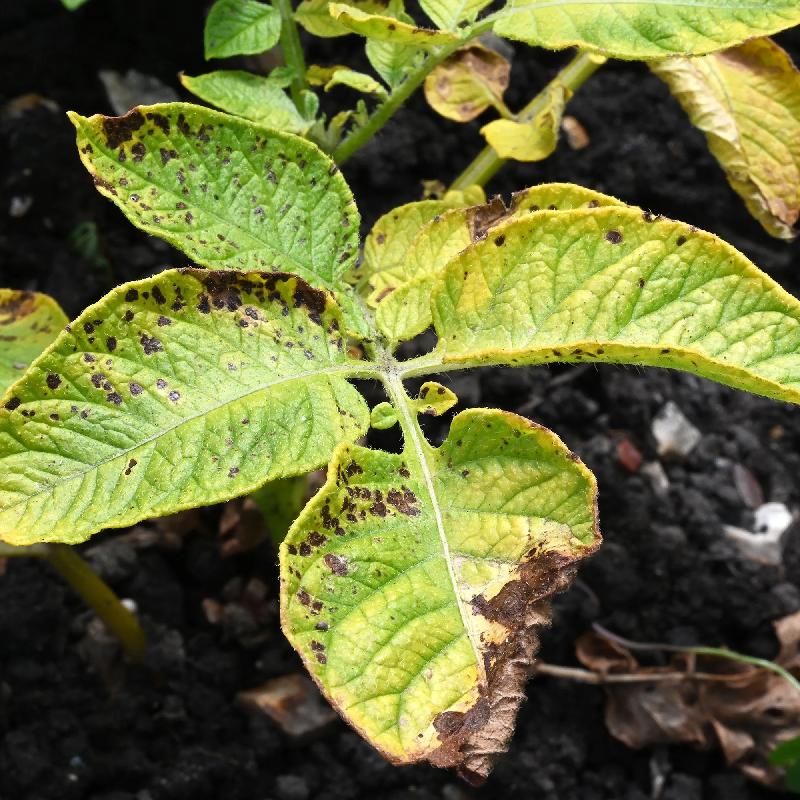
When fungicides appear to fail, one common reason is that the original problem was not diagnosed correctly. Not every leaf spot, stem lesion, or decline symptom comes from the same pathogen. Some problems are fungal, some are bacterial, some are stress-related, and some are caused by nutrition, water, or root issues.
Similar symptoms do not always mean the same disease
Yellowing, spotting, blighting, and wilting can look similar in the field, especially in the early stage. If the underlying cause is misunderstood, the fungicide may be judged unfairly because it was never aimed at the right target in the first place.
This is why disease recognition is not a minor detail. It is one of the foundations of fungicide performance.
Match the fungicide to the disease, not just to the crop
A fungicide should be chosen based on the target disease, the stage of development, and the field situation. Choosing by crop alone is not enough. The same crop can face very different disease complexes, and those do not always respond the same way to the same chemistry.
In commercial practice, the right question is not only, “What fungicide is used on this crop?” The better question is, “What disease pressure are we trying to manage, and what kind of activity is needed here?”
Coverage decides whether the fungicide reaches the target
Even a good fungicide can underperform if the spray does not reach the infection site. Coverage is often the hidden factor behind uneven results. A field may receive the product, but the target surface may still be poorly protected.
Dense canopies make control harder
As crops develop, the canopy can become thicker and more humid. That creates two problems at the same time. First, disease pressure often increases because the microclimate favors infection. Second, spray penetration becomes more difficult because the target zone is harder to reach.
This is especially important in crops with dense foliage, overlapping leaves, or lower-canopy disease pressure. If the deposit stays mainly on the outer surface, the fungicide program may look correct on paper while performing weakly in the field.
Even deposits matter more than many users realize
Fungicides do not help much where they do not land. Uneven spray distribution creates gaps in protection, and those gaps often become the starting points for visible disease breakthrough.
That is why effective application is not only about putting product in the tank. It is about getting a consistent deposit onto the part of the plant that actually needs protection.
Weather can strengthen or weaken fungicide performance
Weather affects both disease development and fungicide results. A product that performs well under moderate pressure may look weaker during extended humidity, repeated rainfall, or rapid disease development.
Rain, humidity, and leaf wetness raise the pressure
Many fungal diseases move faster when humidity stays high and leaves remain wet for longer periods. In those situations, the disease is more aggressive, and the demand on the fungicide program increases. Protection intervals may feel shorter because the field risk is higher.
This does not always mean the fungicide is poor. It often means the pressure is stronger than the original program assumed.
Stressed crops may respond differently
High temperature, drought stress, transplant shock, nutrient imbalance, and other plant stresses can also affect field performance. In some situations, the crop is already under pressure before the fungicide is applied. That can make recovery slower and can increase the chance of crop sensitivity if the product is not used carefully.
Good fungicide management is therefore not only about the pathogen. It is also about the condition of the crop receiving the treatment.
Rate discipline protects both efficacy and crop safety
Many users assume stronger use always creates stronger results. In reality, poor rate discipline can damage both efficacy and safety. A rate that is too low may not provide the level of protection expected. A rate that is too aggressive, or used at the wrong moment, may increase crop injury risk without solving the underlying management problem.
The more professional approach is simple: follow the product label, respect local regulations, and treat rate decisions as part of a system rather than a quick fix.
This is especially important in export markets and structured crop programs, where performance consistency matters just as much as visible short-term control.
One spray rarely carries the whole season
Another common mistake is expecting one fungicide application to cover a long disease window by itself. Fungicide protection is temporary. New growth appears, deposits weather over time, and disease pressure changes with the season.
Residual activity must match real field pressure
Residual performance should be judged in the context of disease pressure, weather, crop growth, and canopy expansion. In calm conditions, protection may hold acceptably. In fast-moving disease periods, that same protection window may feel much shorter.
The right mindset is program-based management. Instead of asking whether one spray can solve the issue, it is better to ask whether the overall disease management plan is aligned with the real field risk.
Why fungicides seem to fail
When growers, distributors, or field advisors say a fungicide failed, the real cause is often one of several operational or biological gaps rather than a simple chemistry problem.
Common reasons include:
- The disease was diagnosed incorrectly
- The application started too late
- Coverage inside the canopy was weak
- Weather increased disease pressure beyond expectations
- The crop was already heavily damaged
- The program relied too heavily on one chemistry pattern
- Protection intervals did not match field risk
- The field conditions reduced overall consistency
This matters because the solution is not always “change to a stronger product.” In many cases, the better solution is to improve the decision process around timing, targeting, and delivery.
A practical checklist to improve fungicide results
If you want more consistent fungicide performance, focus on this sequence:
1. Identify the disease correctly
Do not build the program on assumptions. The more accurate the diagnosis, the more rational the fungicide decision becomes.
2. Start protection before the disease is fully established
Earlier action usually gives fungicides more room to work effectively.
3. Improve canopy coverage
Make sure the fungicide reaches the real infection zone, not only the outer leaf surface.
4. Watch weather and field pressure closely
Humidity, rainfall, and canopy wetness can change the risk level quickly.
5. Manage the season, not just one spray
Think in terms of protection continuity, not one-time correction.
6. Respect the label and local use requirements
This supports crop safety, performance consistency, and compliance.
7. Review performance with context
Judge results based on disease pressure, crop condition, timing, and coverage together, not in isolation.
FAQ
Why does a fungicide fail even when the product itself is good?
Because field performance depends on more than the active ingredient. Late timing, poor diagnosis, weak coverage, high disease pressure, and crop stress can all reduce visible results.
Is preventive fungicide application always better?
Not always in every situation, but preventive or early-timing use usually gives fungicides a better chance to protect healthy tissue before infection becomes severe.
Can poor spray coverage reduce fungicide effectiveness?
Yes. If the fungicide does not reach the target surface or infection zone evenly, performance can become patchy even when the product choice is reasonable.
Does weather really change fungicide performance?
Yes. Rainfall, humidity, temperature, and leaf wetness can all affect disease pressure and how long protection appears to hold in the field.
Should you increase the rate when control looks weak?
Not as a default reaction. Weak control can come from timing, diagnosis, pressure, or coverage problems. Always follow the label and local regulations rather than treating higher rate use as the first solution.
A stronger fungicide program starts before the spray tank
Better fungicide performance is rarely the result of one decision. It usually comes from a chain of good decisions made before the application begins. When disease identification, timing, coverage, weather awareness, and label-based use are aligned, fungicides have a far better chance to deliver stable field results.
For growers, distributors, and professional crop teams, that is the real goal: not just applying a fungicide, but building a disease management program that performs more consistently under real field conditions.
Table Of Contents
- Main factors that affect fungicide effectiveness
- What makes fungicides work better in the field?
- Apply early, not only after the disease looks severe
- Correct diagnosis comes before product choice
- Coverage decides whether the fungicide reaches the target
- Weather can strengthen or weaken fungicide performance
- Rate discipline protects both efficacy and crop safety
- One spray rarely carries the whole season
- Why fungicides seem to fail
- A practical checklist to improve fungicide results
- FAQ
- Why does a fungicide fail even when the product itself is good?
- Is preventive fungicide application always better?
- Can poor spray coverage reduce fungicide effectiveness?
- Does weather really change fungicide performance?
- Should you increase the rate when control looks weak?
- A stronger fungicide program starts before the spray tank