Meaning, Types, and How It Works
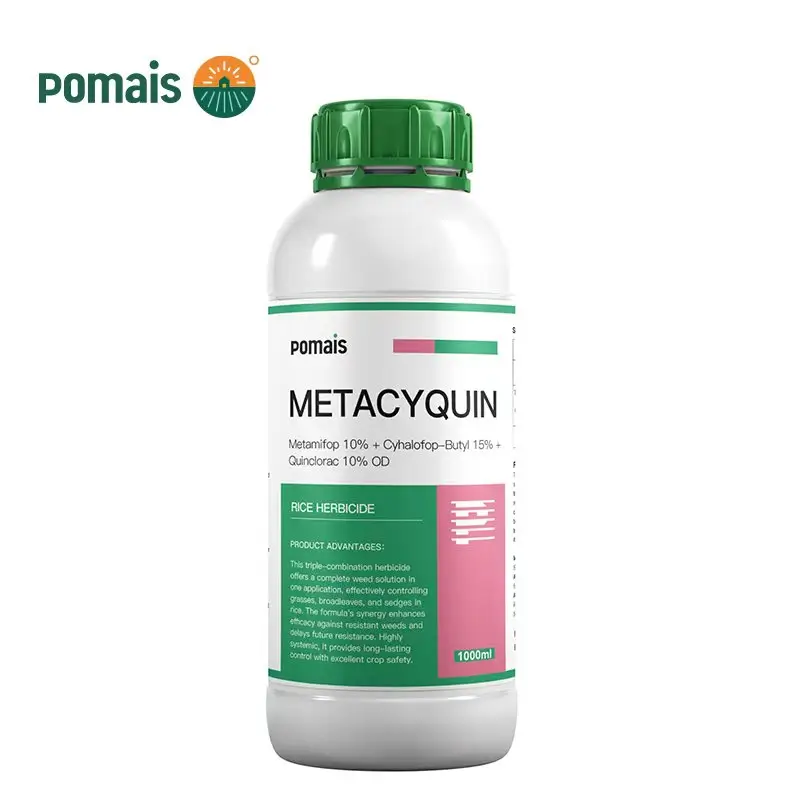
A herbicide is a pesticide used to control unwanted plants, especially weeds. In practical agriculture, herbicides are used to reduce weed competition, protect crop growth, and improve field management efficiency. EPA defines herbicides as chemicals used to manipulate or control undesirable vegetation.
Herbicides matter because weeds compete with crops for light, water, nutrients, and space. They are an important part of modern weed control, but they are not the whole strategy. FAO describes integrated weed management as a combination of complementary methods such as herbicide application, grazing, land fallowing, and biological control, rather than reliance on one tool alone.
What is a herbicide?
A herbicide is one type of pesticide. The difference is simple: pesticide is the broad category, while herbicide refers specifically to products used against unwanted vegetation. This means every herbicide is a pesticide, but not every pesticide is a herbicide. EPA uses this same practical logic in its crop protection references.
In field use, herbicides may be applied in row crops, orchards, plantations, pastures, non-crop areas, and many other vegetation-management settings. The purpose is not always total plant kill. In some cases, the goal is selective weed suppression while keeping the crop or desired vegetation safe.
Why herbicides are important in weed management
Weed control is not only about cleaner fields. It is about protecting crop performance. When weeds are left unmanaged, they can reduce access to sunlight, moisture, nutrients, and space, which directly affects crop establishment and yield potential. That is why herbicides remain a core part of practical weed control in many farming systems.
At the same time, modern weed control is moving toward a more disciplined model. FAO’s integrated weed management framework makes it clear that herbicides work best when combined with other measures, not when treated as the only answer. That point is even more important today because herbicide resistance has become a major management issue in many regions.
The main types of herbicides
The most useful way to explain herbicides to readers is through two practical classification pairs:
- Selective vs non-selective
- Contact vs systemic
These terms do not describe exactly the same thing. One pair explains what plants the product affects. The other explains how the product behaves after application. Oregon State’s weed management materials and extension references use these distinctions clearly, and they remain the easiest way for readers to understand basic herbicide behavior.
Selective herbicides
Selective herbicides are designed to control certain weeds while causing less damage to the crop or desired plants. Oregon State defines a selective herbicide as a material toxic to some plant species but less toxic to others. This is why selective products are widely used in crop situations where weed control must happen without destroying the crop itself.
Non-selective herbicides
Non-selective herbicides control a broad range of plants. They are typically used where total vegetation control is needed, such as some non-crop areas, bare-ground situations, or pre-plant clean-up programs. Because they can damage many plant types, they require more careful positioning and use.
Contact herbicides
Contact herbicides mainly affect the plant tissue they directly touch. Their visible effect is often strongest on sprayed leaves and green surfaces. If coverage is uneven, control can also be uneven, because untreated plant tissue may survive. Oregon State extension material describes non-systemic or contact herbicides as affecting only the part of the plant they touch.
Systemic herbicides
Systemic herbicides are absorbed and moved within the plant. That makes them useful when control depends on reaching more than the sprayed surface alone. Oregon State notes that systemic herbicides move from the initial point of application to other parts of the plant. In practical terms, this often makes them more suitable for weeds where internal movement matters for full control.
Common herbicide types at a glance
The simple table below summarizes the most common ways herbicides are described in practice. The definitions reflect EPA, Oregon State, and HRAC terminology.
| Type | What it means | Main practical value | Main limitation |
|---|---|---|---|
| Selective | Controls certain weeds better than desired plants | Useful where crop safety matters | Not designed for total vegetation control |
| Non-selective | Controls a broad range of plants | Useful where full vegetation removal is needed | Can injure many plant types |
| Contact | Affects the plant tissue directly touched by the spray | Fast visible burn-down on exposed tissue | Coverage quality matters a lot |
| Systemic | Moves within the plant after uptake | Better suited where internal movement improves control | Response may look slower than surface burn-down |
How do herbicides work?
Herbicides do not all work in the same way. At a basic level, some work mainly through surface injury, while others move inside the plant and disrupt essential growth processes. That is the traditional practical explanation most readers start with.
Today, however, herbicides are also discussed through mode of action. HRAC Global’s 2026 Herbicide MoA Classification explains herbicides by their biological targets and active ingredient groupings, and HRAC says this framework is intended to support sustainable use and preserve herbicide effectiveness. This is a major step beyond the older “contact vs systemic” explanation.
That means two herbicides may both be systemic, but still belong to different mode-of-action groups. Likewise, two products may both control broadleaf weeds, but do so through different biological pathways. For readers, the key point is simple: practical behavior and mode of action are related, but they are not the same thing.
Why herbicide mode of action matters today
Mode of action matters because weed control is no longer judged only by whether a product works once. It also matters whether herbicides can remain effective over time. HRAC’s working group states that its MoA resources are meant to help practitioners understand active ingredients and support sustainable use. EPA’s herbicide resistance guidance also highlights the reality that weeds can adapt and survive herbicide treatments that were previously effective.
This is why herbicide classification has become more important. A basic definition answers what a herbicide is. A better technical explanation also helps readers understand why product grouping, stewardship, and resistance management now matter in everyday crop protection.
Herbicides are important, but they are not the whole weed control plan
One of the biggest mistakes in weed management is treating herbicides as a stand-alone solution. FAO’s integrated weed management approach explicitly combines herbicide use with other control methods, because no single measure is the best answer in every situation. This is a more realistic way to explain herbicides today.
So when someone asks, “What is a herbicide?” the modern answer should be broader than a one-line dictionary definition. A herbicide is a pesticide used to control unwanted plants, but its value depends on how it is classified, how it works, and how it fits into a wider weed management strategy.
FAQ
What is the difference between a herbicide and a pesticide?
A pesticide is the broad category for products used against pests. A herbicide is the specific pesticide category used to control unwanted vegetation or weeds.
What is a selective herbicide?
A selective herbicide is designed to control certain weeds while causing less damage to desired plants or crops.
What is the difference between contact and systemic herbicides?
Contact herbicides affect the plant tissue they directly touch, while systemic herbicides are absorbed and moved to other parts of the plant.
Are all herbicides broad-spectrum?
No. Some are selective and aimed at certain weed types, while others are non-selective and control a much wider range of plants.
Why does herbicide mode of action matter?
Because mode-of-action grouping helps explain how herbicides work biologically and supports more sustainable use, including resistance-management thinking.